Top Tracks
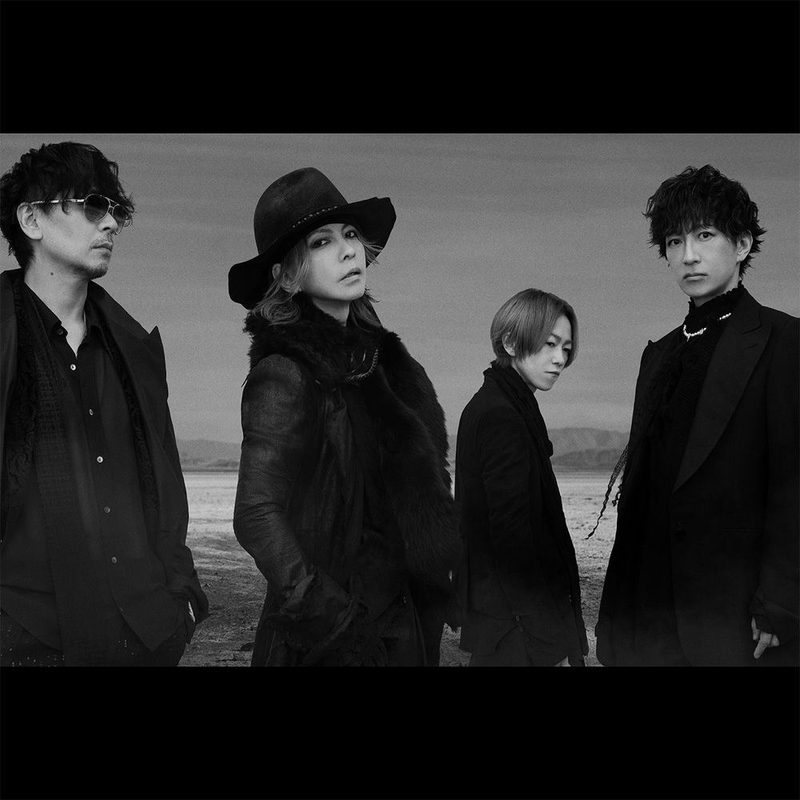
L'Arc~en~Ciel
L'Arc-en-Ciel (Japanese: ラルク アン シエル, Hepburn: Raruku an Shieru; French for "The Rainbow"), stylized as L'Arc〜en〜Ciel and abbreviated as Laruku, is a Japanese rock band formed in Osaka in 1991 by bassist Tetsuya and vocalist Hyde. Following the departure of original members Hiro and Pero, guitarist Ken and drummer Sakura were recruited to replace them in 1992 and 1993, respectively. While they first got their start as a visual kei band, L'Arc-en-Ciel have not had any association with the movement since their major label debut in 1994. Sakura left the band in 1997 and was replaced by Yukihiro in January 1998, completing the current line-up. With a reported 40 million records sold, L'Arc-en-Ciel are one of the best-selling music artists in Japan. Their 1999 simultaneously-released albums Ark and Ray are each one of the best-selling albums of all time in Japan. L'Arc-en-Ciel have had seven number one studio albums and 21 number one singles. They were ranked number 58 on a 2003 list of the top 100 Japanese pop musicians by HMV Japan, and were the first Japanese act to headline Madison Square Garden in New York City.
Releases in the Catalogue
- L'Arc~en~Ciel - TOUR 2007~2008 THEATER of KISS -
KSBL-5909(2008)
Members
Current
- hyde - Vocal, Vocals
- ken - Guitar
- TETSUYA - Backing Vocal, Backing Vocals, Bass
- yukihiro - Drum, Drums, Styling for yukihiro
Former
History
Translated from the ja.wikipedia article L'Arc〜en〜Ciel (CC BY-SA 4.0), revision 110693138.
Formation
Around 1990, tetsuya, who was working part-time at the well-known Osaka record store Waltzdo, was looking for members to form a band. There, he became acquainted with SAMMY, the vocalist of BILLY & THE SLUTS, a band that was well known on the Osaka scene at the time. SAMMY introduced him to hiro, saying that there was “a good guitarist,” and hiro would later become a founding member. tetsuya subsequently began making plans to form a band with hiro, but these plans never came to fruition. While continuing to visit live music venues frequently in search of members, tetsuya was invited by a guitarist to take part in a session: “We’re thinking of playing at a studio soon, and since we don’t have a bassist right now, do you want to try playing with us?” At that session, he met hyde and pero, who would also become founding members.
Meanwhile, hyde, like tetsuya, had been searching for members in Osaka in order to form a band. He became acquainted with a band called Kiddy Bombs and began associating with its drummer, pero. After Kiddy Bombs effectively disbanded following the departure of its vocalist, pero asked hyde, “Why don’t we start a band together?” Thus, hyde and pero, joined by Kiddy Bombs’ guitarist and bassist, formed a new band, Jelsarem’s Rod. Soon after its formation, the three members other than the bassist attended the aforementioned session in which tetsuya also participated.
In an interview for a book published in 2010, tetsuya recalled the session: “We decided on songs beforehand and played several songs at the session... We were feeling each other out, like an arranged meeting. pero and hyde were already in a band together, while hiro and I were looking for members elsewhere.” In his autobiography published in 2012, hyde recalled: “We had only just formed Jelsarem’s Rod at the time, so I had no interest in other bands. I went because pero said, ‘Let’s go,’ but it felt like we just played through everything and went home. Still, I thought, ‘They’re good,’ and, ‘They’re completely different from our band.’” Having met hyde and pero at this session, tetsuya took a major step toward the formation of L’Arc~en~Ciel.
This was because, upon meeting hyde and pero, tetsuya reportedly had the intuitive feeling that “hyde, pero, hiro, and myself all connected,” and that they would become “an amazing band.” He therefore asked hyde and pero whether they would form a band with him. However, as noted above, hyde declined because Jelsarem’s Rod had only just been formed. Unable to give up, tetsuya frequently attended Jelsarem’s Rod concerts and continued trying to persuade hyde and pero. Looking back on tetsuya’s enthusiastic invitations at the time, hyde said: “It seems that tetsuya had his eye on us at that session. After that, he started coming to every one of our band’s shows, came to the after-parties, and called us. He would ask, ‘So? Is the band going well?’ When I said, ‘Yeah, it’s going well,’ he would say, ‘I see,’ looking disappointed.” tetsuya later reflected on his own conduct at the time, saying, “It’s hard to imagine now. Back then, I was more talkative—or rather, I was an active, forward-going young guy.” Pero also appeared receptive to tetsuya’s invitation; according to tetsuya, he said something to the effect of, “If hyde says okay, I’ll go anytime.”
Having continued to receive these persistent appeals, hyde decided to have a session with tetsuya, partly because he could see no future for Jelsarem’s Rod. Around February 1991, hyde, tetsuya, and pero held a session at a studio near Nishinomiya-kitaguchi Station in Hyōgo Prefecture, joined by hiro, who had been looking for band members with tetsuya. Through this session, hyde felt that “the quality was completely different from our own band after all,” and responded to tetsuya’s invitation by saying, “Let’s do it together.” He decided to disband Jelsarem’s Rod and form a new band. Looking back on deciding to dissolve Jelsarem’s Rod, hyde later wrote: “Before long, our band, Jelsarem’s Rod, had really reached a dead end. Every time, the guitar solos were out of scale. I liked them very much as friends, but I began to realize that this would not work as a band. Later, I had to bring up disbanding Jelsarem’s Rod, and I remember that being very painful.”
Following these twists and turns, the rock band L’Arc~en~Ciel was formed by four members: hyde, whose artist name at the time of the band’s formation was “hide,” on vocals; hiro on guitar; tetsuya, whose artist name at the time was “tetsu,” on bass; and pero on drums. The band had no leader at the time of its formation, but tetsuya became leader at hyde’s recommendation. In his 2012 autobiography, hyde explained why he thought tetsuya should be the leader: “I think we needed to decide who would lead. He probably could not say himself, ‘I’ll be the leader,’ so I said, ‘I think tetsuya is suitable to be the leader.’ tetsuya was dependable even then.”
Following its formation, L’Arc~en~Ciel underwent three rounds of member departures and additions. In every case, the newly added member was either an acquaintance of tetsuya, the band’s originator, or a person who, despite not knowing him directly, had coincidentally been present during the course of events leading to the band’s formation. For example, ken, the guitarist who joined in 1992 as hiro’s replacement, was a childhood friend with whom tetsuya had previously played in a band and had also seen L’Arc~en~Ciel as an audience member. Sakura, who joined in 1993 as pero’s replacement, had worked as a roadie for Masafumi Minato, the drummer of the rock band DEAD END, which had visited the record store where tetsuya worked part-time. Although sakura did not know tetsuya directly, he had visited tetsuya’s workplace. Yukihiro, who joined in 1998 following sakura’s departure, was the drummer of ZI:KILL at the time. On the very day that tetsuya encountered at a live music venue the guitarist who invited him to the first session where he met hyde and pero, yukihiro had coincidentally been performing there.
Thus, L’Arc~en~Ciel’s history would be shaped by a total of seven members: its four founding members and the three members who joined later. As explained in the origin of the band’s name, L’Arc~en~Ciel means “rainbow,” an atmospheric optical phenomenon. In Japan, a rainbow is generally said to have seven colors, coincidentally matching the number of members who have belonged to L’Arc~en~Ciel. In an interview with a music magazine in 2006, tetsuya said of this coincidence: “There have been seven members of L’Arc in total. Maybe that is fate, too. Without any one of them, there would be no L’Arc as it is today.” When artists designate a milestone anniversary year, they are often divided between those who calculate it from their major-label debut year and those who calculate it from the year of formation or the beginning of their activities. L’Arc~en~Ciel has often used the latter, its year of formation, as its basis. In L’Arc~en~Ciel’s case, using the year of formation makes it possible to include the period during which the four founding members were active as an amateur band, though it remains unclear whether this is the reason the band uses its year of formation as the basis.
Origin of the Band Name
When the band was formed, each of the four original members reportedly came up with various ideas for its name. Ultimately, the name proposed by tetsuya, “L'Arc~en~Ciel” (written in kana as ラルク アン シエル), was adopted. It derives from the French term “arc-en-ciel,” meaning “rainbow” (literally, “a bridge across the sky”). Its French pronunciation is [laʀkɑ̃sjɛl], rendered in Japanese as “Rarukonsuieru” or “Rafukonsuieru.” Depending on the design used, the band name is also sometimes written as “L'Arc-en-Ciel.”
According to tetsuya, “L'Arc~en~Ciel” was a term he happened to find while visiting bookstores and looking through various materials in search of a suitable band name. In a 2011 interview with a music magazine, he described how he found the term: “There was no internet at the time, so I looked through various materials at bookstores, and this French term was among them. It means ‘rainbow,’ but if you divide it up, it means ‘a bridge across the sky.’ It looked good and sounded good. It also suited the idea of expressing various colors through music. It is long and difficult to remember, but I thought it would have an impact when written in the Roman alphabet.” He also stated, “It had an atmosphere like a clothing brand, so I thought it might be good.” When interviewed by the American business magazine Forbes in 2012, hyde said of the name’s origin: “When we wanted to choose a name, all English words had already been used by other bands, so we chose French because it felt fresh.” He added, “At first it did not particularly have any meaning, but since the band’s music is now diverse, we also think it is a name that expresses that well.”
Incidentally, the band logo and flyers created during L'Arc~en~Ciel’s early period were designed by hyde. Having admired professions such as painter, manga artist, and designer, and having considered pursuing a career in art, hyde had previously attended a design school.
The band’s official fan club, “Ciel,” was established on February 1, 1995. Approximately five years later, on April 21, 2000, its name was changed to “LE-CIEL.” The official fan club’s name derives from the French word “ciel,” meaning “sky,” and expresses the hope that the fans and the band could have a relationship like that of the “sky” and the “rainbow.”
There was once an unfounded rumor that tetsuya had liked the name of a coffee shop in Hankyu Umeda Sanbangai and had taken the band’s name from it. This theory has been clearly denied numerous times by tetsuya himself, who named the band. In an interview in the February 2011 issue of the music magazine WHAT's IN?, tetsuya said of the falsehood: “There was a theory that had been written on Wikipedia for a long time saying that there was a coffee shop in Umeda with the same spelling and that I took it from there. But it has absolutely nothing to do with that. Think about it rationally—there is no way I would take a band name from the name of a coffee shop, is there!?”
A Strategy Contrary to That of Amateur Bands at the Time
The newly formed band L'Arc~en~Ciel held its first concert at Namba Rockets (難波ロケッツ) on May 30, 1991. Although the concert was part of a multi-band bill, it drew more than 100 people. On September 27 of the same year, the band held its first one-man concert at the same venue, attracting an audience of more than 300. L'Arc~en~Ciel thus began gaining momentum shortly after its formation and undertook a variety of activities centered on Osaka. According to hyde, the band was able to gain a certain degree of popularity from the outset largely because hiro was already known through a previous band and because of the promotional and image strategy devised by tetsuya.
In his autobiography published in 2012, hyde reflected on the band's activities at the time of its formation, writing: “What was interesting was that L'Arc~en~Ciel was strategic from the very beginning. I thought that if we just put on good live shows, eventually people would notice us, our audiences would grow, and we might be able to become professionals. But L'Arc~en~Ciel was very strategic. tetsuya already had a list of a great many people, which he used to send direct mail, and guitarist hiro was already somewhat well known, so even just his return became a topic of conversation. Was the first concert attended by 150 people? It had an audience size that was a little unimaginable under normal circumstances.” tetsuya later recalled, “I do not think it would be allowed now because of personal information protection laws, but at the time I used the customer list at the record store where I worked part-time to send direct mail announcing our concerts.”
L'Arc~en~Ciel subsequently began pursuing a strategy opposite to the typical activities of amateur bands at the time. Many amateur bands then raised funds by selling homemade demo tapes, which they used to undertake extended live activities in various regions under the name of touring. Amid the abundance of such bands, L'Arc~en~Ciel avoided selling demo tapes in its earliest period, deliberately remained largely in Osaka, and did not announce future concert schedules. Regarding this policy, tetsuya stated: “At the time, other similar bands around us played lots of concerts. They would play two or three times a month and even tour around the country. But we limited ourselves to once a month—no more than that—and did not tour. We approached it with the attitude that people should come and see us in Osaka, even from Tokyo. We deliberately limited the number of concerts.” He also stated, “Other bands would announce their schedules far in advance, but instead, we told people who came to the concert about the next one. Only by coming to a concert could they find out when and where the next one would be held. Conversely, they would not know if they did not come. We deliberately created a situation in which people did not know when they would next be able to see us.”
tetsuya later recalled that this strategy of reducing the number of concerts and not announcing long-term schedules encouraged word-of-mouth publicity and increased attendance. When the band performed, its members also reportedly took the initiative in sending music magazine editors information about the performances and audience numbers as a promotional measure to spread publicity further. hyde later reflected on this strategy for expanding the band's profile, stating: “I thought tetsuya's idea was very smart: rather than going to Tokyo, where there were so many bands, it would be more conspicuous to become number one in Osaka. And that is exactly what happened.”
According to tetsuya, the reason the band deliberately did not sell demo tapes was his belief that “people could not hear the songs unless they came to the concerts” and that the band wanted to release recordings when it felt the timing was right. Consequently, despite receiving approaches from labels and requests to sell demo tapes soon after its formation, L'Arc~en~Ciel declined all of them. In a 2011 interview, tetsuya stated: “There have always been many adults swarming around indie bands, and there still are. As soon as they hear that a band has a decent audience at a live house, they immediately come running and ask, ‘Why not do it with us?’ There are many adults thinking about making money. Many came to us as well. We did not want to put anything out yet, as far as our own timing was concerned, so we turned down offers even when they came from major labels.”
Many amateur bands at the time also sought to reduce the distance between themselves and their audiences, including fans in post-concert gatherings. L'Arc~en~Ciel, however, avoided all excessive communication with fans. Furthermore, according to tetsuya, from a branding perspective the members refrained from personally distributing handmade concert leaflets and flyers. To avoid having members carry performance equipment in front of concertgoers entering and leaving the venue, the band employed roadies and staff from the time of its formation. Discussing this image-building in an internet radio program hosted by himself and released in 2022, tetsuya stated: “From the beginning, we made ourselves look popular as part of our branding,” “There has never been a time in L'Arc's history when we carried our own equipment into a venue,” and “We did it thoroughly before we became successful, even if people said we were full of ourselves.”
By employing such carefully considered strategies, L'Arc~en~Ciel was able to fill venues for one-man concerts soon after its formation. The band did not need to ask senior bands to let it perform as an opening act, or travel around the country to build recognition through multi-band concerts. Its start was therefore an unusually smooth one for a band at the time. tetsuya jokingly reflected, “L'Arc~en~Ciel did not struggle.” Regarding the band's policy at the time, he stated: “We did what needed to be done. We did what needed to be done, but we did not make much wasted effort, or do unnecessary groundwork. I think effort is meaningless unless it is directed at the target. No matter how desperately you work, you will not get results if the effort itself is meaningless. So we set proper goals, thought about where we wanted to go, what we wanted to do, and what effort was needed to achieve that, and then did what needed to be done. That is all we did.”
tetsuya also explained why the band performed relatively few multi-band concerts in its early days: “Personally, I really did not want to play shows with three or four bands on the bill. I suppose there is a strategy in which fans of other bands become interested in your band through multi-band shows, but at the time I did not want to adopt that strategy. When three or four bands are playing, the backstage area becomes a mess, does it not? I suppose I disliked that. So I really wanted to do one-man concerts from the beginning. I wanted to make it a band that could perform one-man shows from the beginning. We only played multi-band bills for the first few shows.”
As described above, L'Arc~en~Ciel was unusual among amateur bands at the time in being a band that did not associate closely with others and performed few multi-band concerts. One of its few multi-band counterparts was the rock band Kuroyume. tetsuya stated: “The multi-band concerts with Kuroyume were mutually beneficial. Kuroyume had already established a certain position and had a certain number of regular fans. For both Kuroyume and L'Arc, it felt as though both sides would benefit, so we decided to perform together.” In 2022, when asked on a radio program he hosted, “Who is L'Arc~en~Ciel's rival band?”, tetsuya answered, “Our greatest rival is Kuroyume.” The band's vocalist Kiyoharu (清春) continued to have connections with L'Arc~en~Ciel after both bands made their major-label debuts, including appearances together at live events and in songwriting settings.
Departure of Hiro and Pero; Joining of Ken and Sakura
In March 1992, L'Arc-en-Ciel held giveaway live performances for the original video L'Arc-en-Ciel in Osaka and Tokyo, expanding its base of activities into the Kanto region. However, guitarist hiro left the band following the performance on June 12 of that year. He was replaced by ken, a childhood friend of tetsuya who was then a university student majoring in architecture at the Nagoya Institute of Technology. Immediately after ken joined, the band signed with Night Gallery Records and began recording its first album.
In October 1992, the song “VOICE”, which had been created during the album recording sessions, was contributed to the omnibus album Gimmick as the band's first audio release. Although the album was subsequently completed, the members, dissatisfied with its quality, decided to withdraw its release. The label responded that it would release the album by exercising its ownership of the master rights regardless of the members' wishes, and that, should the release be canceled, L'Arc-en-Ciel would be required to pay the full production costs spent on recording. Negotiations consequently became difficult.
After hearing about the issue from tetsuya, Seiyu Oishi, the president of DANGER CRUE RECORDS, now president of Maverick D.C. Group, contacted Fumiaki Morita of DENDO MARIONETTE, the president of Night Gallery Records, whom he knew. As a result of negotiations between Oishi and Morita, it was decided that DANGER CRUE RECORDS would assume the recording expenses in exchange for the transfer of the master rights to DANGER CRUE RECORDS. Having obtained the master rights, Oishi took L'Arc-en-Ciel's wishes into account and decided to discard all of the album's recordings except for “Floods of tears” and “Yasouka” (夜想花), two songs that had been selected for single release and for which advance reservations had already been completed.
Shortly after the trouble was resolved, drummer pero left the band on December 30, 1992. On January 16, 1993, sakura, who had worked as a session drummer in various rock bands and cabaret house bands, joined the group. From January 28, 1993, L'Arc-en-Ciel began working with DANGER CRUE RECORDS to produce its first album anew.
Shift in Activity Policy, First Nippon Budokan Concert, and First Million-Seller
In support of the album, L'Arc~en~Ciel held the concert tour “Tour Sense of time '94” from July 1994. In December of the same year, the group released Siesta ~Film of Dreams~, an unconventional collection of image videos containing four short films, each starring and planned by a different member.
Although L'Arc~en~Ciel had thus begun full-scale activities on a major label, a large number of tickets remained unsold for the first time at the final performance of the aforementioned tour, held at Tokyo Bay NK Hall on August 27 of that year. In addition to this incident, some aspects of the group's activities had been decided without the members' knowledge following their major-label debut. Around the end of 1994, the four members therefore met alone at Denny's to discuss the future direction of their activities. Through this meeting, they affirmed among themselves, “We are not puppets, so we should decide for ourselves,” and adopted a policy of shifting their activities in 1995 toward a focus on live performances, transitioning to band-led activities.
In September 1995, taking into account that they had been unable to promote their concerts the previous year, the group released their third album, heavenly. It was produced with an extended pre-production period in an effort to shorten the recording process. The album was self-produced, with the band taking the lead in the arrangement work. Hyde described it as “the first release in which the members were able to demonstrate their abilities in arranging.” Following the album's release, in accordance with the policy decided the previous year, the group held tours intermittently and performed more than 35 concerts over the course of one year. In December of the same year, they held their first concert at Nippon Budokan. From around this time, L'Arc~en~Ciel also began appearing on television music programs such as Music Station in order to promote their recordings. In later years, Hyde recalled the circumstances that led to their appearances on music programs: “To be honest, I wasn't particularly interested in becoming such a popular artist. I never imagined I would be singing on television. But once I entered this world, there were many things I could not do unless I became successful when I wanted to express my art. I think that was what increasingly drove things forward.”
Having positioned 1996 as “a year to carefully make an album,” L'Arc~en~Ciel began residential recording sessions around July of that year after a period of songwriting. The songs “flower” and “Lies and Truth,” created during those sessions, were released as advance singles. The single featuring “flower,” a song reminiscent of neo-acoustic music, sold more than 300,000 copies cumulatively and became the group's first hit. In December of the same year, they released their fourth album, True. According to Hyde, in making the album, the group wanted to create “a sound that envelops the listener” and “an absorbing intro like those in Western music, rather than something that merely serves as a tool to lead into the vocals.” He also said that he frequently listened to Radiohead, Atomic Swing, and the Cranberries at the time.
The album also adopted a melody-oriented approach, conscious of the mainstream Japanese music scene of the period. Six co-producers and arrangers were brought in for its production: Haruo Togashi, Hajime Okano, Takeyuki Hatano, Takao Konishi, Akira Nishihira, and Masahide Sakuma. The decision to shift toward creating pop songs intended to reach a broad audience was prompted by the fact that sales of the previous two albums had not grown as much as expected. Looking back on the album's production in later years, Ken recalled: “You would hear people here and there saying, ‘It isn't selling.’ At that time, a greater proportion of the songs were mine than they are now. So I thought, well, my songs must be bad. Rather than being bad, though, the music I had listened to was not the kind that sold a million copies at all, and I had not been listening to the charts, so I thought, ‘Of course I'm making music that won't sell.’ The same went for the arrangements. So I felt like we made True because we decided to make something that would sell.” Ken has also said of the pop music he aimed for, “I feel that it must not be vulgar. If it becomes vulgar, I think it will become boring even when listened to years later.” The melody-oriented album reached number one on the Oricon weekly album chart in its sixth week after release, becoming the group's first chart-topper. It subsequently remained on the chart for 110 weeks and ultimately became their first million-selling release.
2026–
In 2026, the year of the band's 35th anniversary, a special website was launched. In August of the same year, L'Arc~en~Ciel appeared as the headliner on the main stage of SUMMER SONIC 2026, one of Japan's largest urban music festivals, and an arena tour is scheduled to begin in October.
On August 14 and 16, 2026, the band headlined the Osaka and Makuhari shows, respectively, of SUMMER SONIC 2026. With the set list having been published on social media in advance, they performed 14 songs over 90 minutes. In collaboration with SUMMER SONIC 2026, they also released the new song "Sotennen Shoku" (総天然色), which was performed live for the first time that day.
Musical Influences and Preferences
There are not many artists whom all four members like in common, but they reportedly all enjoyed listening to 1980s new wave and post-punk artists such as the Cure, Depeche Mode, Johnny Marr (the Smiths, the The), and U2, as well as recordings containing aesthetic gothic rock elements such as those found in songs by DEAD END. Consequently, many of the songs L'Arc~en~Ciel released during its early years were influenced by these artists.
In a 2004 interview, looking back on the songwriting of the group's early period, ken stated, “There were ideas such as making backing tracks with an atmosphere like the Cure.” tetsuya said, “The Cure are the Bible.” Masahiro Oishi, the president of the group's management agency, recalled meeting L'Arc~en~Ciel and stated, “I remember that all four members listened frequently to UK rock such as the Cure.” Hyde has also said that ken once asked him to “sing like Robert Smith of the Cure.”
L'Arc~en~Ciel and “Visual Kei”
Pop Jam incident
On April 19, 1999, L'Arc~en~Ciel took part in the recording of the May 1 broadcast of NHK's music program Pop Jam. Two songs were scheduled to be performed during that day's recording, but reports in the April 25 issue of Nikkan Sports and other outlets stated that, after completing one song, the members stopped performing and left the stage.
The incident was reportedly triggered when the comedy duo Bakusho Mondai, who were serving as the program's hosts at the time, referred to the members as “visual kei” during their talk segment. Following the talk, L'Arc~en~Ciel performed “HEAVEN'S DRIVE,” but tetsuya reportedly ignored the chorus part he was originally supposed to perform and ended the song. He was also reported to have appeared displeased as he left the stage, including by “handling his bass carelessly.” It was further reported that, although two songs had originally been scheduled for recording, the session was ended after one song, prompting debate over the series of actions.
The truth of the incident and reactions afterwards
Regarding the above reports, tetsuya denied them, stating that the two songs had originally been scheduled to be recorded separately and that it was incorrect to say that he handled his instrument carelessly, became enraged, and left. He also stated that, before appearing on the program, the band had communicated requests and other matters to its management agency and record company, but these had not been conveyed to Bakusho Mondai, the hosts.
In his 2004 interview book Tetsugaku., tetsuya stated: “The plan was not to perform two songs in succession, but to perform them separately, one at a time. After performing one song, when we returned to the dressing room, we discussed it and said, ‘We want to work comfortably, but the proper environment has not been prepared, so we will excuse ourselves for today.’ We properly offered our greetings, explained this properly to Bakusho Mondai as well, and then left.” He also said: “The staff should have properly held a meeting beforehand, but that had not been done. [...] I think that was a mistake by the staff on our side. It was not that NHK or Bakusho Mondai had done anything wrong. We were not angry with Bakusho Mondai at all. They are comedians, so of course they are going to say things in a humorous way. It was an action intended to mean, to our own staff, ‘Please do your job more properly.’”
Although some weekly magazines and sports newspapers reported that the band had clashed with NHK, L'Arc~en~Ciel appeared on the 50th NHK Kōhaku Uta Gassen at the end of 1999, the year of the incident. Since that year, L'Arc~en~Ciel has frequently appeared on music programs broadcast by NHK, including Pop Jam, and in 2010 provided the song “BLESS” as NHK's broadcast theme song for the Vancouver Olympic and Paralympic Games, with no particular discord apparent. Regarding the reports at the time, tetsuya stated: “There are times when I feel angry, though. A lot of things that are not true get written. But making things entertaining helps them get ratings and sell copies, so I suppose it cannot be helped.”
In February 2019, around 20 years after the incident, Hikari Ota of Bakusho Mondai, who had not spoken about it for many years, recalled the matter on his regular radio program Bakusho Mondai Cowboy. He stated: “They were not angry at me at all, and in fact they said, ‘We are sorry,’ to us,” and, “For the sake of their honor, I will say that they left with a truly sincere attitude, saying, ‘We are very sorry.’” He also stated that the program producer had told him that it was an error on NHK's side. In response to Ota's remarks, tetsuya said on his Nico Nico Channel: “It carries weight when Mr. Ota says it himself,” “There was trouble with our record company, but there was no trouble with NHK,” and “After that, NHK even allowed us to do the Olympic theme.” Through statements by both sides, it became clear that the event reported at the time by weekly magazines and others as “a fight between L'Arc and Bakusho Mondai” had not occurred.
Perhaps in light of the above disturbance, L'Arc~en~Ciel has rarely been featured when television programs and other media broadcast special features on visual kei bands. L'Arc~en~Ciel was also said to have once sent documents through its record company to CD retailers stating: “Please do not place L'Arc~en~Ciel products in the visual kei section; please place them in the J-pop and rock sections.”
Leader tetsuya's views on “Visual Kei”
To this day, tetsuya has consistently rejected being included within the framework of “visual kei,” a movement rather than a musical genre, and has rejected being described as “visual kei.” However, he has not singled out and criticized bands referred to as visual kei or bands that identify themselves as such, nor has he expressed a negative view of the fashion commonly worn by visual kei artists. In a 2004 interview, tetsuya made the following remarks.
Other members' reactions to “Visual Kei”
hyde — On a program in which he appeared in 1994, hyde stated that he had been greatly influenced by the stylistic beauty of New Romantic, which had been popular in Britain during the 1980s. Citing Duran Duran as an example, he said, “I like their looks, but I also love their music,” and added, “That is the way I would be happiest to be received.” In a 2000 interview, he commented with resignation: “Personally, I do not like being called visual kei, but since the public calls us that, there was a sense that it could not be helped.” In THE HYDE, published under his real name in 2012, he stated: “We did not form a band because we admired that kind of framework.” In the same book, while stating that “the roots of bands of our generation are around metal and new wave” in reference to “bands that were once called visual kei,” he said of visual kei bands that had emerged after him as of 2012 that their roots were “visual kei,” writing that “fundamentally, they are actually different from us.” In a 2023 interview, hyde stated: “Above all, I want to freely do what I find enjoyable and break down the borders between genres and scenes. I think rigid ideas such as ‘it has to be this way’ get in the way. It is more interesting to absorb all the good things and sublimate them in one's own way, and as entertainment, I think it would be better if genres and scenes became more mixed up.” This suggested that he seeks musical activity that does not adhere to genre classifications or frameworks.
ken — In response to the question, “Do you dislike being seen as prioritizing visuals?” on a program in which he appeared in 1994, ken stated: “Not really. If they go along at the same pace rather than one taking priority, then it is fine... It is better than being told, ‘This person's music is good, but his face is uncool.’” In 2010, when asked on Twitter what nickname he would give himself, he replied, “The darkest person in the visual world.”
yukihiro — In 2009, regarding being described as a visual kei band, yukihiro stated: “When people like me were called visual kei, when I was in ZI:KILL, I thought, ‘Do not say that.’” He also said: “Once bands started saying, ‘We are visual kei,’ I think that is when it became different from L'Arc. In my time, we did not form bands saying, ‘We are visual kei.’” Regarding his impression of L'Arc~en~Ciel before he joined, he once stated: “They were called so-called visual kei, right? I thought, that is not the kind of music people like that would play, and that was interesting. It meant that none of them really had that kind of blood in them, you know? [laughs]”
Assessments by critics
Tetsushi Ichikawa — The music critic and founding editor of Ongaku to Hito, Ichikawa, has pointed out regarding L'Arc~en~Ciel's stance: “No matter how anyone looks or listens, they are V-kei, yet they stubbornly continue to refuse to be V-kei.” On the other hand, he highly praised the fact that, at VISUAL JAPAN SUMMIT 2016, a festival of visual kei bands organized by YOSHIKI of X JAPAN, the founder of the visual kei-focused Extasy Records, the three members other than tetsuya appeared under their solo names, while L'Arc~en~Ciel itself did not appear. Ichikawa commented: “Actually, at this festival, ‘the person who did not appear was the protagonist.’ It was like the courage and righteousness of someone who refused to appear of his own will [wry laugh]. After all, BUCK-TICK, DEAD END, and ISSAY—the group that appeared at Luna Fes but refused this time—are not visual kei bands. So even if the other three stood on the stage of YOSHIKI-chan's festival, I think the stubbornness of tetsuya, the only one who did not appear, is admirable, even though it is unbelievably troublesome. But it was the first time I had admired that man.”
Chiaki Fujitani — The writer Fujitani compared L'Arc~en~Ciel with X JAPAN, a representative visual kei band, and analyzed that “X JAPAN and L'Arc have entirely different backgrounds.” Pointing to the members' interests and preferences outside music, she described L'Arc~en~Ciel as “clearly a band with a cultural temperament. Therefore, its tastes and preferences fundamentally differ from those of the delinquent visual kei centered on X JAPAN. Their ‘assertions’ are not without reason,” showing a degree of understanding for L'Arc~en~Ciel's stance.
Fuyu Shogun — Regarding the 1999 Pop Jam incident, music writer Fuyu Shogun speculated: “This incident is sometimes discussed as a negative episode, such as ‘L'Arc's selfishness as stars,’ but it was a rejection of being categorized with a later-created term as part of a trend, despite merely pursuing their own aesthetic, and it was also a rebellion against the ‘visual kei label,’ which had brought various prejudices upon them.” He recalled that “there were therefore voices of support at the time of the incident from people other than L'Arc fans as well.” While noting that “L'Arc~en~Ciel is not a visual kei band because it does not approve of being called visual kei,” Fuyu Shogun also stated: “Nevertheless, considering the influence it had on later bands, it goes without saying that it is a band that cannot be omitted when discussing that scene.”
Part-Change Bands
As a form of in-band amusement, L'Arc~en~Ciel has occasionally had its members switch instrumental roles for recording and live performances. As an extension of this pastime, three part-change bands—KIOTO, D'ARK~EN~CIEL, and P'UNK~EN~CIEL—were conceived in the past, and performed at concerts held under the L'Arc~en~Ciel name. Although the members differed in some cases, all three bands shared the same allocation of parts: L'Arc~en~Ciel bassist tetsuya switched to vocals; drummer sakura or yukihiro switched to bass; vocalist hyde switched to guitar; and guitarist ken switched to drums.
KIOTO
A TOKIO cover band that appeared at several concerts held under the L'Arc~en~Ciel name in 1995. The band began after tetsuya developed a friendship with Shigeru Joshima of TOKIO, and covered only TOKIO's song "LOVE YOU ONLY". It was described as a band officially recognized by TOKIO leader Shigeru Joshima, with the premise that "the band's details are shrouded in mystery."
D'ARK~EN~CIEL
A thrashy metal band that appeared at concerts held under the L'Arc~en~Ciel name between 1996 and 1997. Unlike the other two bands, it produced original songs.
P'UNK~EN~CIEL
A L'Arc~en~Ciel cover band active from 2004 to 2012. The project involved rearranging songs previously released by L'Arc~en~Ciel in punk rock, hard rock, and heavy metal styles, then self-covering them with the members' parts changed. All of its recordings were released as B-sides on L'Arc~en~Ciel singles.
Sources
- Wikidata entity Q218866.
- en.wikipedia, L'Arc-en-Ciel (revision 1350454105), CC BY-SA 4.0.
- ja.wikipedia, L'Arc〜en〜Ciel (revision 110693138), CC BY-SA 4.0.
- Photograph: L'Arc~en~Ciel.jpg - Press shot via Deezer (artist 133611).