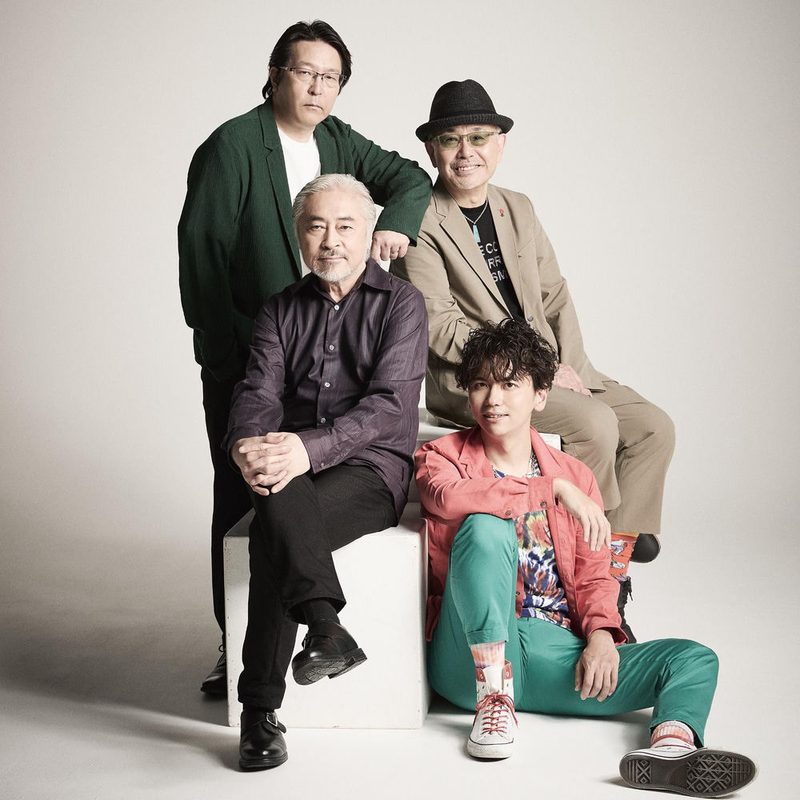
Casiopea (カシオペア, Kashiopea) is a Japanese jazz fusion band formed in 1976 by guitarist Issei Noro and bassist Tetsuo Sakurai. After lineup changes the following year that added keyboardist Minoru Mukaiya, Casiopea made their major‑label debut with their self‑titled album in 1979, and drummer Akira Jimbo joined in 1980. During this period, they released more than a dozen albums before Sakurai and Jimbo left the band amid disputes over concurrent band memberships. In 1990, bassist Yoshihro Naruse and drummer Masaaki Hiyama joined, resulting in a second era marked by multiple drummer changes, with Jimbo returning as a supporting member in 1997. Noro suspended all band activities in 2006, leading to a six-year hiatus. In 2012, the band resumed activities with Mukaiya not rejoining and Kiyomi Otaka replacing him on keyboards. Renamed Casiopea 3rd for its third period, the group recorded its first album in eight years. After Jimbo left again in 2022, he was replaced by drummer Yoshinori Imai and the band entered its fourth period as Casiopea‑P4. Otaka left in 2025 and was replaced by keyboardist Jun Abe, and the band reverted to its original name.
Top Tracks
Releases in the Catalogue
- Casiopea - The Way of Casiopea -
GNBL-1002(2004)
Members
Current
- Issei Noro - Guitars, Products Supervisor, Written-By
- Yoshihiro Naruse - Basses
- Jun Abe
- Yoshinori Imai
Former
- Akira Jimbo - Drums
- Minoru Mukaiya - Keyboards
- Tetsuo Sakurai - Electric Bass
- Hidehiko Koike
- Kiyomi Otaka
- Masaaki Hiyama
- Noriaki Kumagai
- Takashi Sasaki
- Toru Suzuki
History
From the en.wikipedia article Casiopea (CC BY-SA 4.0), revision 1375285478.
1974–1976: Early Activities
In 1974, guitarist Issei Noro, a third-year student at Tokyo Metropolitan Tamagawa High School, and bassist Tetsuo Sakurai, a second-year at Keio Shiki Senior High School, met through a mutual friend and quickly became friends. The three began rehearsing together at a studio in Tokyo, aiming to emulate Beck, Bogert & Appice with a hard rock and funk-based sound. Occasionally, they included a vocalist in their band, but the core members, Noro and Sakurai, were flexible in their musical approach, causing the band's direction to gradually shift towards instrumental music with jazz elements.
1980–1989: Lineup Changes and Heyday
Akira Jimbo met Tetsuo Sakurai when Sakurai stood in for Keio University's big band. Impressed by his talent, Sakurai recommended him as Casiopea's next drummer, with Jimbo's first recording with the group being the 1980 live album Thunder Live. Over approximately a decade, the band were successful both domestically and internationally while maintaining a stable lineup. Overseas audiences noted the group's incorporation of Japanese‑style melodies, and although the band initially targeted the U.S. market, songs made in Japan proved to resonate more strongly with international listeners. In 1981, the band released Eyes of the Mind, produced by American drummer Harvey Mason, his first collaboration with the group, and it was their first album recorded in the United States. On May 21, 1982, they released Mint Jams, a live album compiled from performances recorded at Central Hall in Tokyo in February of that year. The album was selected as best album of 1982 by the Japanese jazz magazines Adlib and Jazzlife, with Tower Records Japan describing Mint Jams as a landmark in Japan's jazz‑fusion history and one of the band's career‑defining works. The band's albums began to attract attention overseas, prompting tours in the United States and Europe; guitarist Issei Noro credited Mint Jams with making their European tour possible. The members toured internationally and returned to Japan later that year to record 4×4 with international musicians including Lee Ritenour, Don Grusin, Nathan East, and Harvey Mason. In 1989, Casiopea's contract with their record label ended and the band prepared to transfer to a new label, prompting a stop to band activities, including album production and national touring, as members pursued side projects. During the hiatus, Tetsuo Sakurai and Akira Jimbo formed Shambara, recording and touring with other musicians. Issei Noro and Minoru Mukaiya objected to their simultaneous membership in Shambara and Casiopea, arguing it would hinder Casiopea's planned restart. Sakurai and Jimbo insisted they could balance both bands, but after the dispute remained unresolved they left Casiopea and formed the duo Jimsaku.
1990–2006: Second Period and Hiatus
With only Issei Noro and Minoru Mukaiya remaining from Casiopea's original lineup, bassist Yoshihiro Naruse and drummer Masaaki Hiyama joined the group, replacing Sakurai and Jimbo, respectively. The band's second period became more experimental as the band sought to avoid stagnation, with Noro crediting Naruse's arrival with transforming the sound of the rhythm section. The band resumed live performances and touring in 1990, though Hiyama left two years later due to illness and was replaced by drummer Noriaki Kumagai. The band continued with this lineup from 1992 until 1996, when Kumagai departed and the band became a trio. Drummer Kozo Suganuma played with them for a time, but in 1997, Akira Jimbo returned as a supporting member, and by the following year, Jimbo had performed at all of their scheduled performances. By the late 1990s, the members had begun pursuing solo projects. Mukaiya began producing a railway simulator as part of his train hobbies, Naruse worked as a member of the band Beast Kingdom, and Noro recorded his first solo album. Noro and Naruse discussed taking a hiatus from the music college where they both taught, due to the overwhelming demands on their time. In 2006, wanting to stop touring and play less with Casiopea, Noro decided to suspend all group activities, effectively putting the band on hiatus. He later commented that his activity in Casiopea had begun to take a toll on him because of the pressure to produce a large volume of songs in diverse styles. Although he considered disbanding the group, his management advised presenting the break as a hiatus in case of the band's resumption of activities.
2012–2022: Return and Third Period (Casiopea 3rd)
Although all the members were pursuing their own paths and Noro believed that the disbandment marked the end of Casiopea, the 2011 Tōhoku earthquake and tsunami inspired him to restart the band to uplift people's spirits through music in the wake of the disaster. In April 2012, Noro announced that Casiopea would be active again, although Minoru Mukaiya had left the band and was replaced by keyboardist Kiyomi Otaka. Alongside Noro and Otaka, bassist Yoshihiro Naruse and drummer Akira Jimbo rejoined the band; Jimbo was credited as a supporting member but treated as a full member. The band adopted the name Casiopea 3rd and also announced that they would perform for the first time since their hiatus at Tokyo Jazz 2012 and would be releasing their first best-of album. On October 9, 2013, they were appointed by the Japan Audio Society as an Ototen ambassador, the association’s first time naming one in recognition of its long-running contribution to the audio industry. Throughout the 2010s, Casiopea 3rd resumed releasing albums, releasing Ta・Ma・Te・Box in 2013, their first in eight years, which reached number 18 on the Oricon Albums Chart and topped the jazz & classical chart. They released their second album, A・So・Bo, two years later. They would continue with I・Bu・Ki in 2016 and A・Ka・Ri in 2018. On April 15, 2020, Casiopea released the Blu-ray/DVD Celebrate 40th for their 40th anniversary, later embarking on the Casiopea 3rd Heartful Tour in October while also broadcasting online. In February 2022, Akira Jimbo announced that he would leave Casiopea 3rd; his final appearances were on the April and May 2022 Billboard Tour.
2022–2025: Fourth Period (Casiopea-P4)
In July 2022, Issei Noro announced that drummer Yoshinori Imai would replace Akira Jimbo and the band would be renamed from Casiopea 3rd to Casiopea-P4. They released their 35th album, New Topics, soon after, with Imai's younger age motivating the band to record for the first time in three years. They released their 36th album, Right Now, in 2024 to mark the band's 45th anniversary, with all members contributing compositions to the album, including an unreleased piece. In December 2024, prior to performances in Osaka and Tokyo, the band announced that they would be holding their final concert with Kiyomi Otaka as their keyboardist, as she chose to leave the band. A month prior to the final concert, the band had contacted pianist Jun Abe to see if he wanted to join as a replacement, which he accepted prior to the announcement.
2025–present: Fifth Period
In May 2025, Casiopea, now using their original first name, introduced Jun Abe as a member during a series of performances. Noro said in an interview with Daily Sports that he reverted to his original name after Otaka's decision to leave and to refresh the band's image. They released their 37th album, True Blue, under their original name on August 27, 2025.
Musical Style and Influence
Upon the release of their self-titled album, the band was assigned the catchphrase "thrills, speed, super technique," which later became synonymous with their musicality and playing style. As the years progressed, Noro began incorporating more musicality into the band's pieces and reduced the emphasis on technique compared to their early years, largely due to the introduction of accurate music programs on computers. The band does not record demos, as Noro writes the charts and the members rehearse for a few weeks before recording. Final ideas are developed on the day of recording, as Noro felt demos constrained the music and preferred ideas made during group performance. According to The Nikkei, although many bands competed for attention during the fusion boom in Japan, Casiopea managed to secure lasting popularity through their technique and dynamic performances. In Indonesia, Casiopea’s influence helped spark a brief jazz fusion boom marked by the formation of several jazz-rock and fusion groups, including Krakatau, Karimata, and Emerald Band. The wave of fusion music played a key a role in shaping Indonesia’s burgeoning Pop Kreatif genre (referred to colloquially as Indonesian city pop) in the mid-1980s. Krakatau and Casiopea once matched at the same stage at the 21st Economics Jazz at Gadjah Mada University. Another example of Casiopea’s impact was the formation of the jazz-fusion ensemble Indonesia 6, which drew extensively from the band’s musical style.
Sources
- Wikidata entity Q1047729.
- en.wikipedia, Casiopea (revision 1375285478), CC BY-SA 4.0.
- ja.wikipedia, カシオペア (バンド) (revision 110146767), CC BY-SA 4.0.
- Photograph: Casiopea.jpg - Press shot via Deezer (artist 1380184).